
What Is Claircognizance and How to Develop This Psychic Ability
J.K. Rowling’s Harry Potter series.
Dmitri Mendeleev’s Periodic Table.
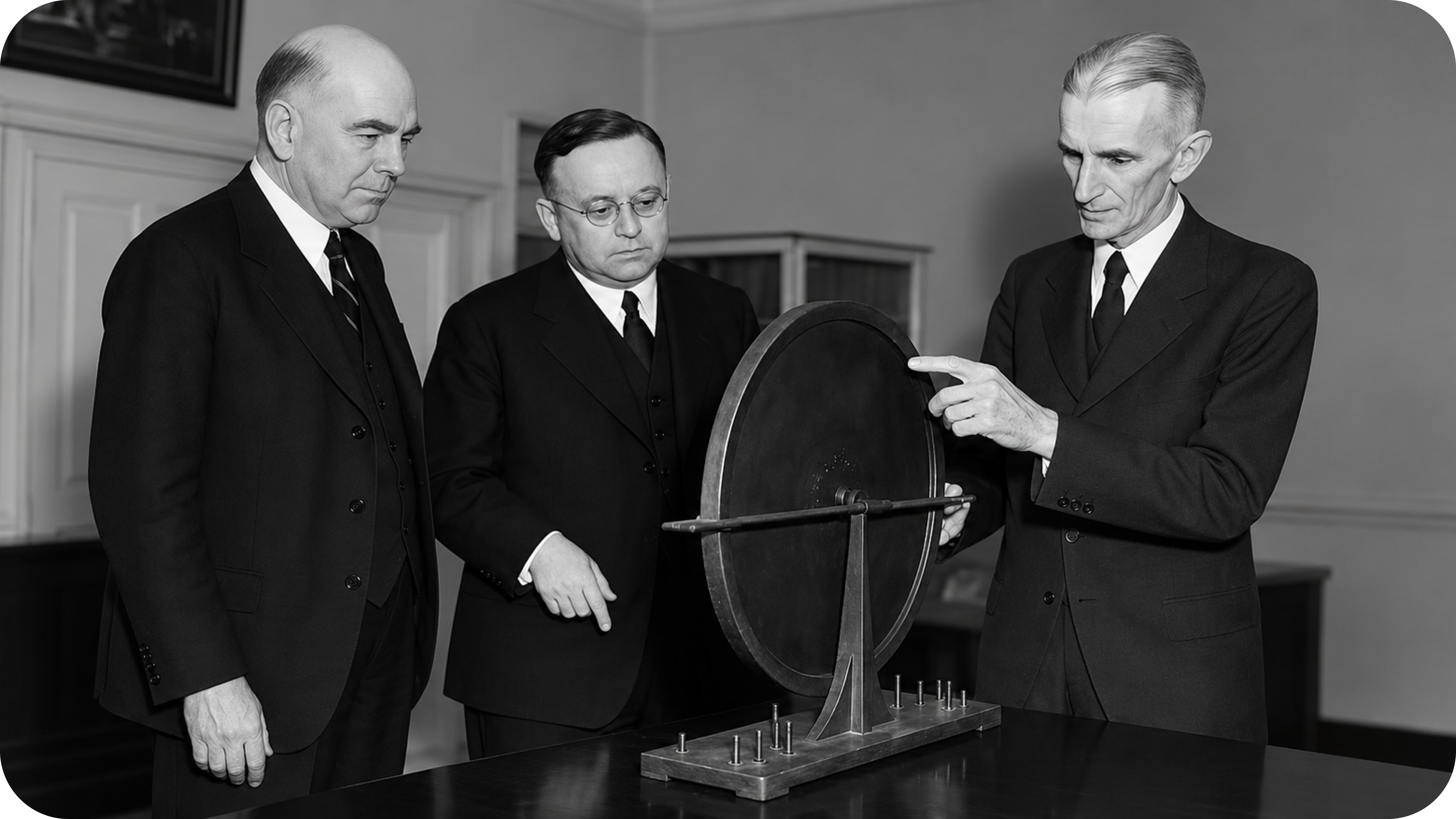
Nikola Tesla’s discovery of the rotating magnetic field.
The ideas came to them out of nowhere. The phenomenon is known as claircognizance: you simply know something without knowing where that knowledge comes from. The ability is not fixed. It can be trained.
You’ll find everything in this guide.
Let’s get started.
First, What Does Claircognizance Mean?
The word comes from French clair meaning “clear” and cognizance meaning “knowledge” or “awareness”. So literally, it translates to “clear knowing”.
Understanding the Clairs
Claircognizance is one of 4 ‘clairs’ of intuition, alongside clairvoyance (clear seeing), clairaudience (clear hearing) and clairsentience (clear feeling).
These abilities describe the different ways a person receives psychic information. Usually, one or two come more naturally, making them the most interesting to develop.
If you experience claircognizance, it's a type of psychic ability through which you receive information without a clear chain of reasoning.
People with this ability are called claircognizants.
The phrase that probably captures the idea best is “instant knowing”, also described as “gut feeling”, “idea download”, “spontaneous prediction“ or “sudden discovery/knowing”.
How It Feels
Some compare it to receiving spontaneous messages — except the SMS don’t arrive on your phone, they appear in your mind.
What Science Says
Psychologists suggest that what feels like claircognizant insight may stem from the brain’s ability to process information unconsciously.
Researchers point to the prefrontal cortex and anterior cingulate cortex, areas involved in decision-making, problem-solving, and attention, as possible contributors.
Still, how these processes give rise to claircognizance isn’t fully understood, and the underlying mechanisms remain an active area of research.
Signs You’re a Psychic Knower or Claircognizant
Claircognizant individuals often have a naturally analytical mind. They grasp abstract concepts easily and can solve problems with an intuitive sense of clarity, sometimes giving the impression that they “just know” the answers before anyone else.
For example, they might have a gut feeling that a good opportunity, like a new job, car, or house, isn’t right for them, even when logic suggests otherwise.
Claircognizants are also highly perceptive of truth and deception, often detecting dishonesty quickly, even when evidence points the other way.
In general, claircognizants:
Often “just know” things without thinking
Recall facts they never consciously learned
Solve problems spontaneously
Learn new concepts easily
Sense outcomes before they happen
Feel certain even without proof
Are drawn to truth-seeking
Are good at “reading” people
When we say knowledge, we mean a piece of information, which can be specific, such as "This happened in 1987," or abstract, such as an understanding of why something is happening. It can be about anything: a person, a place, an event, a situation, or a future outcome. The concept isn't restricted to one particular subject.
In practice, you might suddenly know the answer to a question, have a feeling that an event won't happen, or sense that you or your friends shouldn't take a certain road.
You might also start noticing synchronicities. They say that at some point, you can process pretty much any kind of information, within certain limits. If you're not a nuclear physicist, you probably won't figure out nuclear fusion. But you might get a general sense of it.
How to Train and Develop Claircognizant Abilities
Basically, you need to raise your "frequency" and reach a higher level of consciousness — to be more charged, more energized, so you can “tap into” this thing and open it up.
As for the mechanism, you can think of it as having some kind of connection to an information layer, whether you call it the Universe, the planet, the Matrix, the Akashic Records, or an Egregore (a collective psychic entity or energy-information field).
At some point, when you have enough energy and it’s properly structured, you send a request out there, and it automatically comes back to you.
It's like throwing a ball into space: it goes out there, picks something up, and comes back to you.
We’re not saying that’s how it actually works. It’s just one possible working model.
There are different kinds of meditation, initiations, and ways of raising the energy in your body. People follow all kinds of practices, so we’ve compiled a list for you to choose from.
1. “Throwing Questions into the Air”
There’s a simple practice you can use whenever you’re stuck on a work problem. You pose the question silently, almost like “throwing it into the air”, and then you stop forcing a solution.
You let it go and move on with your day. By not overthinking, you give your mind space to recognize the answer when it’s ready.
2. Automatic Writing
Experience shows that the best results come when you relax and don’t try to force the process, letting insights come naturally. One practical method is automatic writing, often called freewriting.
Before you start, meditate and relax until you reach a deeply relaxed state. Then bring a question to mind and let it go. Begin writing whatever comes to mind, without editing or analyzing it. You may receive insights related to your question that day or the next one.
Don’t repeat the question over and over. In the first week, ask it once. If nothing interesting comes up, increase your practice to twice a week. This time, think about the question from different angles during meditation. This works well when you want an answer to a question or a solution to a specific problem.
3. Morning Journaling
You can also practice in the morning, when your mind is still in an in-between state. These moments, when you’re relaxed and not fully awake yet, are the best for claircognizant experiences. Just take a few minutes to write down whatever thoughts come to mind.
If you have a specific question, this is a good time to ask it. You might finally get an answer.
Scientifically, the stage between wake and sleep is called the mind-wandering hypnagogic period. Researchers have found that you can trigger specific dream content during this period. This is called Targeted Dream Incubation (TDI), and there have been numerous studies on it.
You can explore this yourself. Record your question and play it in the morning. For example, if you normally get up at 7:30, set an alarm for 6:00 and have your question play a few times. Three times should be enough. Then go back to sleep. When you wake up again, write down whatever comes to mind.
4. Metacognitive Noticing
Some people do 10-minute focus exercises. The idea is to train your ability to control attention. You pick one target — your breathing, a spot on the wall, or any small object in your immediate surroundings — and hold your focus there.
Start by settling the mind; the quieter you get, the clearer your thinking becomes. In the beginning, your mind will drift. That’s normal. The key is to notice it, redirect your attention, and return to the object. That repetition is what builds focus.
5. Kasina (Trataka)

There's also a practice called Kasina (Trataka), which is basically gazing meditation. The idea is to meditate while looking at the fire, for example.
Ideally, you find a dark place and put a candle about half a meter in front of you. If you don't have a candle, you can stare at any light you have, like the light from your phone or a flashlight. Once you reach jhana (dhyāna), a kind of altered state, you ask a question and see what comes.
6. Insight Tracking
This practice is similar to journaling, but more targeted. When an unexpected idea or conclusion pops up, you write it down, even if it’s just a single line.
Over time, you start reviewing these notes to see how accurate those insights were and what outcomes they led to. Not every thought is intuitive, but by tracking them, you build a feedback loop that helps you recognize the difference.
7. Expand Your Knowledge Bank
Another recommendation is to expand your library of images. On top of that, try to describe more.
In other words, if an answer comes, great. But if you have doubts, start by describing more of what you get. The more descriptors you can find, the better.
8. Stalking Synchronicity
Claircognizance is considered the highest form of inner vision development. At a basic level, it can be cultivated through synchronicity with symbols.
The idea is to get into a specific state, which we can call “controlled folly.” In this state, you try to see everything through the prism of signs. At first, it can feel like “stalking.” You pay attention to anything that catches your eye, write it down, and try to figure out what it means.
Benefits of Claircognizance
By practicing, you strengthen your trust in your inner feelings. Intuitive knowledge often appears suddenly, and people may not understand or be able to explain where it comes from, they tend to ignore it. You learn to listen to yourself.
When you start to understand the nature of these experiences, you learn to apply your insights practically. You’re no longer as affected by the pressure of other people’s opinions.
You'll develop your creativity, find solutions to problems outside your area of expertise, and learn to handle critical situations more effectively, taking action instead of freezing.
Business decisions, ideas, and much more can be drawn from the vast global knowledge base. The only limits are in our minds.
Comments
0No comments yet. Be the first to comment!